
Most weekend backyard projects make the space busier. A new planter box here, a pergola frame there, a pathway to the corner nobody visits. Each individual addition can look fine. Together, they accumulate.
The projects worth doing don’t just add to the yard. They change how the yard reads.
That’s a design distinction, not a snobbery one. A gravel patio with defined edges changes the outdoor room’s structure. A retaining wall that creates a flat usable zone changes what the yard can do. Refinishing a deck surface changes the material quality of everything sitting on it. These are structural improvements in the design sense.
A new bar cart, a birdhouse, a row of solar globe lights: these add things. They may be pleasant additions, but they don’t change the room.
Here are the weekend projects that land on the right side of that line.
Define a zone with gravel and edging
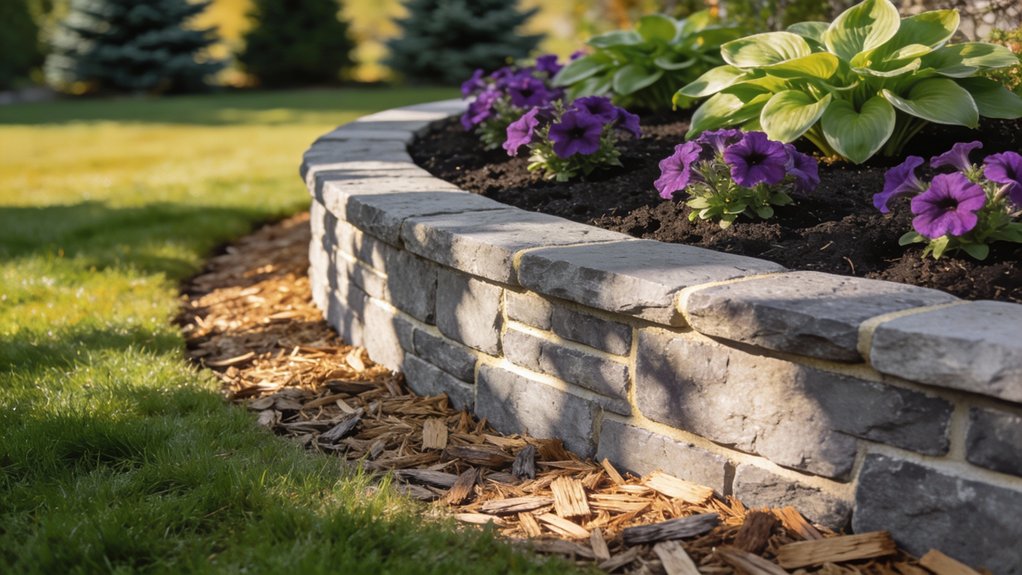
The single most impactful low-cost outdoor room project is defining a clear zone where one didn’t exist before.
A gravel patio doesn’t just add a surface. It separates the outdoor room from the rest of the yard and gives the seating area a material that reads as deliberate rather than default. Lawn is the absence of a decision. Gravel is a decision.
To do this right: mark the area with string lines and excavate 4 to 6 inches. Lay landscape fabric, then 2 to 3 inches of compacted base material before the surface gravel. The edging matters as much as the gravel. A clean metal or timber edge contains the material and holds the geometry. Rounded pea gravel walks more comfortably than angular crushed stone.
This is a weekend project that changes the room’s structure, not just its contents. Do it before buying anything to sit on top of it.
Refinish the deck surface
An outdoor room’s floor is not the fence, not the furniture, not the plants. It’s the deck or patio beneath everything.
A weathered grey deck reads as neglect, even if everything on top of it is well-chosen. A properly finished deck surface sets the register for the whole space.
The process: clean the deck thoroughly with a deck wash or oxalic-acid brightener and let it dry completely. Two days minimum, not hours. Sand lightly if there are raised grain or rough boards. Apply a semi-transparent stain rather than a solid paint finish. Semi-transparent lets the wood grain show through, which reads more natural and hides weathering marks better than a flat opaque coat.
The cheapest change that reads as designed beats the expensive one that reads as renovated. A properly stained deck with existing furniture will look more considered than a new furniture set on an untreated deck.
Work with the house you have, including the parts you can’t change.
Build a fire pit area with defined seating
A fire pit without defined seating is a hazard, not an outdoor room. With defined seating, it becomes the focal point the outdoor room was missing.
What makes it a design decision: the seating arrangement, not the fire feature itself. A semi-circle of flat stone benches or paver seats at a consistent distance from the pit creates a room around the fire. Scattered chairs pushed over when the fire is lit is just a fire.
Excavate 6 to 12 inches for the pit itself and line with heat-resistant material. Firebrick or purpose-made ring inserts handle thermal expansion better than standard concrete block. Position stone seating at a distance where warmth is comfortable: roughly 4 to 6 feet from the edge of the fire.
Keep the seating level and at a consistent height. Mismatched seat heights break the room’s geometry even if the materials are good.
Raised planter boxes as room structure
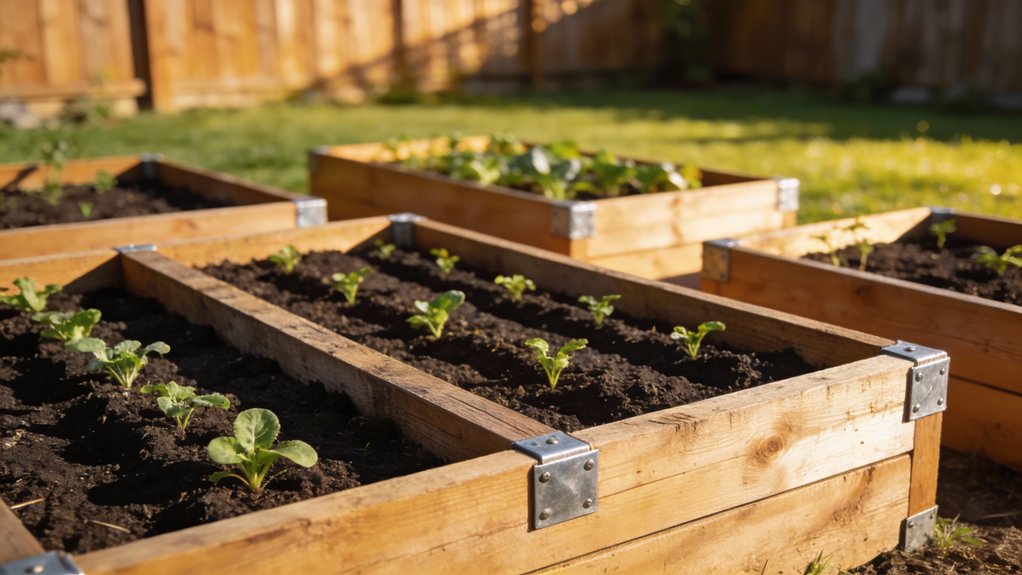
Most garden beds at ground level blur into the lawn. A raised planter box is different: it has a top edge, a clear form, and it reads as furniture rather than garden.
Two or three uniform raised boxes along a boundary or fence line do more to structure an outdoor room than an equal area of in-ground planting. The geometry is visible. The material choice reads as intentional.
Material: cedar and redwood resist rot naturally without chemical treatment. Douglas fir is cheaper and adequate if sealed. A consistent box height (typically 12 to 16 inches for vegetables, lower for ornamentals) keeps the set looking planned.
Placement: treat them as you would low walls. They define zones, create edges, and give the outdoor room interior structure. Against a fence, they bring planting up into the visual plane rather than letting it disappear at ankle height.
Install a simple pergola frame
A pergola overhead creates what an outdoor room almost always lacks: a ceiling.
The ceiling is the thing that makes a space feel like a room rather than an area. A pergola doesn’t close the sky. It frames it. That framing is enough.
Proportions matter more than materials. A pergola that’s too narrow for the seating it covers reads as a trellis, not a room element. The frame should extend at least 2 feet beyond the seating footprint on each side. Post height of 8 to 10 feet gives the vertical scale of an interior room ceiling.
Treated lumber at $300 to $500 for a 10-by-10-foot frame is a reasonable budget. Concrete footings at each post and structural anchors into the deck framing prevent the wobble that makes a DIY pergola read as temporary rather than designed.
Climbing vines added over one or two seasons naturally bring the overhead plane down and thicken the room’s edge. Train one species, not a mix, and let it establish before adding more.
What to skip
Some weekend projects add to the yard without changing the room: ornamental garden art, decorative fencing that doesn’t create real enclosure, bar carts, decorative path lights that don’t define a real edge.
None of these are bad. They’re just additions rather than structural improvements.
Do the structural projects first: zone definition, surface refinishing, overhead framing, defined seating. Then add objects into a room that already reads well. Objects in an unstructured space accumulate; objects in a structured space compose.
That’s the difference between a yard you’re always adding to and an outdoor room you’re happy to sit in.