
Outdoor furniture ages badly for a specific reason that most maintenance guides skim over: the damage almost always starts where the material meets the weather unprotected.
UV rays don’t fade everything. They fade things that haven’t been sealed against radiation. Rust doesn’t appear everywhere on a metal frame. It starts at scratches, at welds, at any break in the protective coating where bare metal meets moisture. Wood doesn’t crack uniformly. It cracks where water got in, froze, and expanded.
Once you see the mechanism, the maintenance makes sense. It’s not about keeping things clean. It’s about keeping each material’s protective layer intact.
What each material is actually fighting
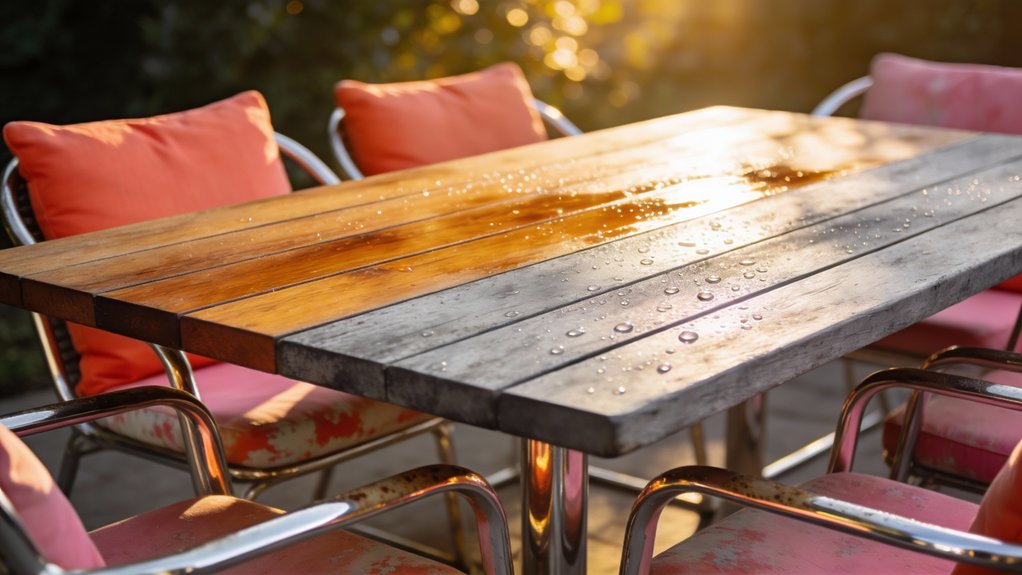
Teak is the low-maintenance outdoor wood because its natural oils repel water without treatment. Left untreated, it weathers to silver-grey, still structurally sound, just visually different from its original honey color. The maintenance choice is whether you want to preserve the color (oil annually, use teak-specific oil) or let it silver (clean once a year, oil only if it cracks). Both are legitimate.
What teak doesn’t tolerate: prolonged contact with standing water, especially at joints and where the wood meets metal fittings. Clean those intersections seasonally.
Powder-coated aluminum fails at chips and scratches. The powder coat is the barrier; bare aluminum under a chip will oxidize quickly in humid conditions. Touch up any chip with matching paint immediately. An untouched chip that looks trivial in June is rust bubbling under the coat by October.
All-weather wicker over aluminum is the compound material. The wicker fiber is usually polyethylene or resin over an aluminum frame. The fiber degrades with sustained UV exposure if the manufacturer’s UV inhibitors aren’t adequate. Good wicker holds color for several seasons; cheap wicker chalks and cracks by year two. The frame under the wicker fails the same way aluminum does. Wicker doesn’t like pressure washing. It loosens the weave.
Cushion fabric fails for two reasons: fading and mildew. Solution-dyed acrylic (the fiber is colored before weaving, not printed after) holds color better than any other outdoor fabric type. Mildew grows where moisture is trapped, in folds, between stacked cushions, anywhere drying doesn’t happen. The fix is simple: cushions stored flat or standing upright, dry.
The seasonal maintenance that actually matters
Spring is the structural inspection. Before bringing everything out, check teak for cracks at joints, aluminum frames for scratched powder coat and bubbling oxidation, wicker for broken or lifted strands. Address small damage now, before UV and heat make it larger.
Clean everything before use. Mild soap and warm water is adequate for most materials. Harsh detergents strip protective finishes. That’s the cleaning mistake most guides don’t mention. A quick clean now is also the point at which you apply oil to teak if you’re maintaining the color.
Summer is the UV protection window. Shade matters: a piece that sits under a pergola or umbrella during peak afternoon hours will outlast an identically made piece in full sun by a significant margin. This isn’t about appearance. It’s about the structural integrity of the materials. Cushions in particular should be stored or covered during extended periods of non-use in high-UV conditions.
Autumn is the sealing window. Apply waterproof sealant to any wooden pieces before winter. That’s the application that prevents water from getting into the grain before freeze-thaw cycles crack it. Metal furniture that needs rust-resistant touch-up should get it now, not in spring.
The cheapest change that reads as designed beats the expensive one that reads as renovated.
Winter storage is where most outdoor furniture investment is either protected or lost.
Cushions never winter outdoors. Bring them in: a garage shelf, a bin in a basement, anywhere dry. Mildew that establishes over a winter in damp cushions usually doesn’t fully clean out.
Metal and aluminum can stay outside with quality covers, but covers must breathe. Sealed plastic covers trap moisture against the frame and accelerate the corrosion they’re supposed to prevent. Look for covers with venting or use covers with a woven breathable material rather than solid PVC.
Teak and hardwood benefit most from storage indoors, but tolerate covered outdoor storage if the cover allows air circulation. The risk outdoors is sustained moisture at joints, not the surface weathering.
The cover problem most people get wrong
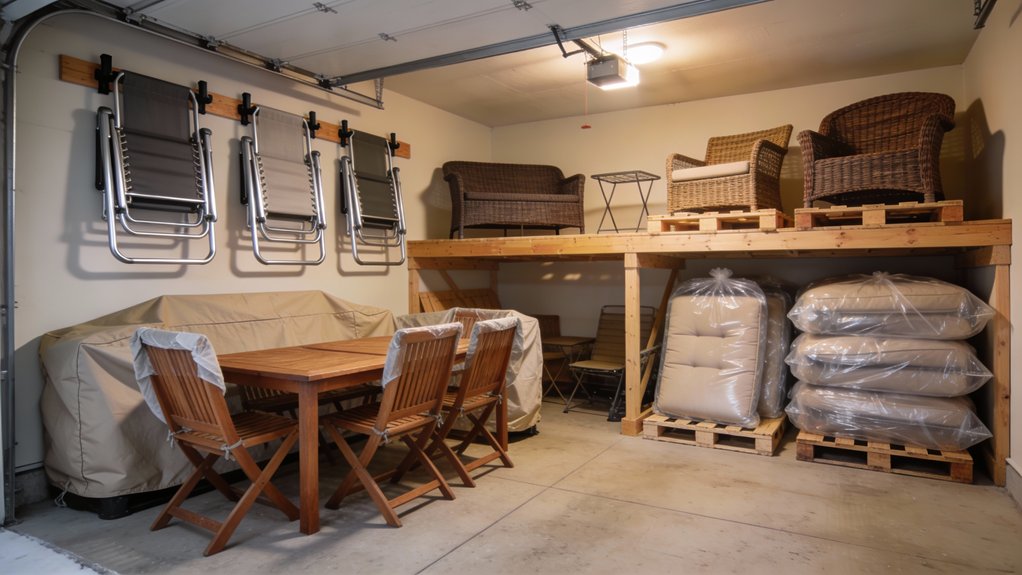
A furniture cover that doesn’t fit is usually worse than no cover at all.
A loose cover collects water in the folds, creates wet pockets that sit against the frame for months, and lifts in wind to let rain in at the base. This is the condition that accelerates the damage covers are supposed to prevent.
A good cover fits snugly at the perimeter and has some form of air circulation. Covers should be anchored so they don’t lift. If a cover is available, it should be sized specifically for the piece.
A properly covered piece in autumn that you check once in January and once in February is more protected than a piece you watch carefully through summer and abandon to a poorly fitting tarp in winter.
The simplest maintenance schedule
Most outdoor furniture only needs four interventions a year:
Spring: clean, inspect, oil teak if needed, touch up any powder coat chips before use.
Midsummer: check cushion storage during long non-use periods; keep shade over pieces where possible.
Autumn: seal or oil wood, touch up metal, store cushions, cover frames with breathable covers.
Midwinter: one check of stored pieces for moisture damage or cover displacement.
That’s it. The point is not to spend weekends on maintenance. The point is to interrupt the damage cycle at the right moments: when the material is most vulnerable, when an hour’s intervention prevents a season’s worth of deterioration.
Work with the house you have, including the parts you can’t change. Outdoor furniture that lasts ten seasons rather than three isn’t more expensive at purchase. It’s better protected through the seasons it already survives.