
You stand at the paint counter and the only question anyone asks is the color. The finish gets decided in four seconds: “eggshell’s fine.” Then a year later the hallway near the light switch is scuffed gray, the bathroom paint is peeling at the corner, and the trim you did flat looks tired.
None of that is a color problem. It’s a sheen problem, and sheen is the choice almost everyone makes on autopilot.
Sheen is a trade, not a taste. A flatter finish hides a wall’s flaws but can’t take a scrubbing. A glossier one shrugs off hands and water but shows every ripple and patch. Pick the wrong side of that trade for the room, and the paint either wears out or puts every imperfection on display.
What sheen actually is
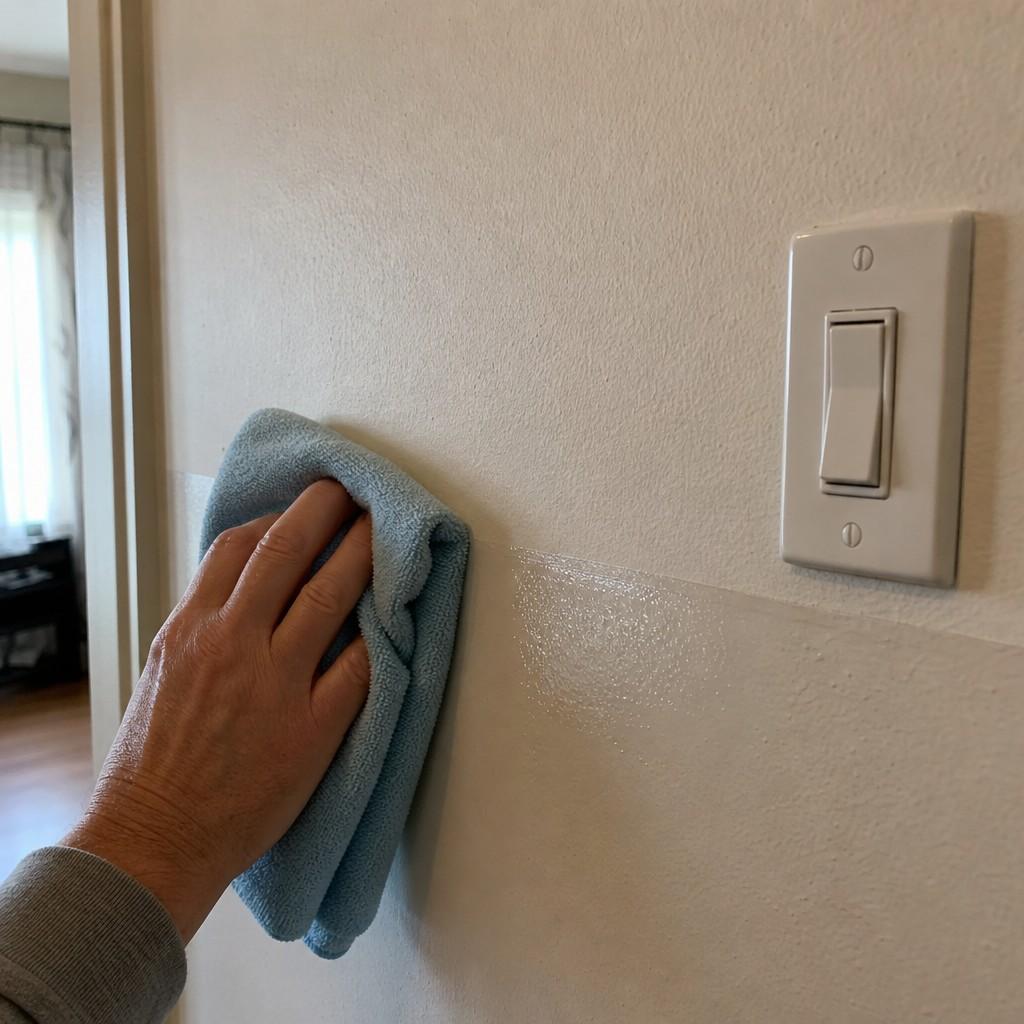
Sheen is just how much light the dry paint film bounces back. Benjamin Moore defines it plainly: sheen is a measure of how much light reflects off a painted surface, resulting in gloss or the lack of it.
That single property drives everything else. The more a finish reflects, the harder and less porous its surface tends to be, which is what lets it survive cleaning. The less it reflects, the more porous and matte it is, which is what lets it swallow flaws.
So the ladder from flat to gloss is really one axis with two ends pulling against each other.
A flatter finish forgives the wall. A glossier finish defends it. You almost never get both in the same can.
Benjamin Moore arranges its whole finish chart along exactly that line, labeled from more forgiving of imperfections to more durable. That phrase is the entire decision in six words.
The finish ladder, end to end
Here is what each rung actually withstands and what it reveals, in the manufacturers’ own descriptions.
- Flat and matte (no shine). Sherwin-Williams describes flat as a completely non-reflective surface that is prone to scuffs and stains and more challenging to maintain. The upside is the other half of the trade: flat lets more pigment through and is the most forgiving of flaws, masking imperfections better than anything above it.
- Eggshell (a soft glow). A low sheen that, in Benjamin Moore’s words, is reminiscent of flat but far more durable than it looks. It is the usual compromise rung: enough wash resistance for daily rooms, not so much shine that the wall starts reporting its own bumps.
- Satin (a gentle luster). Sherwin-Williams calls satin ideal for high-traffic rooms, washable, and good in areas prone to nicks and scuffs. This is where durability starts clearly winning the trade.
- Semi-gloss (a clear shine). Easy to clean and built for trim, doors, and wet rooms. The cleanability is high; the tolerance for a wavy surface is low.
- Gloss (mirror-like). The most reflective and among the most durable, easy to clean and stain-resistant. It is also the most honest about every flaw underneath it, because reflection is exactly what shows a dent.
The pattern is consistent up the whole ladder: more shine buys you cleanability and costs you forgiveness. That is not marketing. It is the same physical fact stated five times.
Where each finish belongs, and the reason
The room decides the finish, because the room decides how much abuse the wall takes and how much light rakes across it.
There is even a standard built around the abuse part. ASTM publishes a test method for the scrub resistance of wall paints whose stated reason for existing is blunt: paints become soiled, especially near doorways, windows, and in work and play areas. The industry measures scrub resistance precisely because some walls get scrubbed and some never do. Your house has both kinds.
Bedrooms and formal living rooms: flat or matte. These walls rarely get touched and almost never get scrubbed. You want the finish that hides the old patch and the settling crack, and that is the flat end. Matte still cleans up reasonably; Benjamin Moore notes matte withstands frequent washing even in busier rooms, so it is the safe matte-side default if you want a little insurance.
Hallways, stairwells, and kids’ rooms: eggshell or satin. This is the highest-traffic interior surface in most homes, the place ASTM names first. Hands, shoulders, backpacks, a stroller wheel. Sherwin-Williams puts hallways, family rooms, and children’s bedrooms squarely in the satin and eggshell range for exactly this reason: washable, and forgiving of nicks and scuffs.
Kitchens: satin to semi-gloss. Grease and splatter mean you will wipe these walls, and a finish you can wipe needs sheen. Semi-gloss takes cleaning best. If full semi-gloss feels too shiny across a big kitchen wall, satin is the honest middle that still cleans.
Bathrooms: matte built for moisture, or semi-gloss. Wet rooms used to mean automatic semi-gloss, and that still works. But the moisture-rated matte finishes have closed the gap. Benjamin Moore points out that bathrooms and high-moisture areas can now be painted in a matte finish formulated for high-humidity environments, so you no longer have to accept a glare to get mildew resistance. Read the product, not just the rung.
Trim, doors, and cabinets: semi-gloss or gloss. This is the one place the design world and the durability world fully agree. Trim gets kicked and touched daily, so it needs the hard, cleanable end of the ladder. The existing piece on why trim reads sharp or sloppy makes the same call for the same reason: a flat wall paint on a baseboard marks permanently.
Name the reason a room feels off before you reach for the fix. With sheen, the reason is almost always a mismatch between the finish and what the room does to it.
The design consequence nobody warns you about
Durability is only half the trade. The other half is what the finish does to the look of the wall, and this is where sheen stops being a maintenance question and becomes a design one.
Gloss reveals. Flat conceals. The more a finish reflects, the more it shows the surface it sits on. A glossy wall turns every roller ridge, every proud patch, every wave in old plaster into a little catch of light. Benjamin Moore warns that even a mid-sheen pearl is more susceptible to showing lap marks and other painting flaws. Go higher and the wall hides nothing.
This is why semi-gloss on a lumpy old wall looks worse than flat on the same wall, even though the semi-gloss is the “better” paint. The shine is doing its job. It is reflecting, and there happens to be a bad surface to reflect.
The flip side is the design reason flat reads expensive. A matte wall is velvety because it scatters light instead of bouncing it, so the color reads deep and even and the surface disappears. That is the same forgiveness that makes it fragile. You cannot scrub a wall that owes its beauty to being porous.
There is a light angle here too, and it ties straight into how rooms shift through the day.
- Glossier finishes bounce more light into the room. In a dark hallway or a north-facing room that already runs cool, a satin or semi-gloss wall throws daylight back instead of absorbing it. That can be a genuine tool. It is the same lever as choosing the right bulb, which is covered in the piece on how a room’s light changes through the day.
- Flat finishes drink light. In a bright south room that already has plenty, a flat wall calms the glare and lets the color sit. In a dim room, the same flat finish can make the space feel heavier than it is.
So sheen is quietly a lighting decision as much as a durability one. A glossier wall in a dark room is working two jobs at once.
How to actually choose
Strip away the chart and it comes down to two honest questions about the specific wall in front of you.
- Will I clean this wall? If yes, climb the ladder until you reach a finish that wipes. Kitchen, bath, hallway, trim: satin and up. If the wall will basically never be touched, you are free to drop to flat or matte and take the forgiveness.
- How good is the surface, and how hard does light hit it? A smooth, well-prepped wall can carry more sheen without exposing itself. An old, rippled wall in raking afternoon light should stay low on the ladder unless you are willing to do the prep that gloss demands. The poorer the surface, the flatter you should go.
The cheapest change that reads as designed beats the expensive one that reads as renovated. Choosing the right sheen costs nothing extra and is the difference between a wall that wears well and one that puts its flaws in the spotlight.
When the two questions pull against each other, prep is the tiebreaker. A wall you have skimmed smooth can take the cleanable sheen the room wants. A wall you have not should keep the forgiving finish, or get the prep first. The same logic runs through the piece on what actually goes wrong when you paint a room: the finish only looks as good as the surface under it.
The takeaway
Sheen is the quietest decision in a paint job and one of the most consequential. It sets how long the wall survives and how much it shows.
Match the finish to what the room does to the wall, then look at the surface and the light before you commit. Cleaned-often rooms climb toward gloss for durability; untouched rooms drop toward flat for forgiveness; a rough wall or a raking light pulls you flatter regardless.
Good design is mostly decisions about light, color, material and proportion, not money. Sheen is all four at once, made at the counter in four seconds, and worth more than four.